Spain's Online Gambling Regulation in 2026: How a Court Revived the Market, and What Comes After the Election
Spain banned welcome bonuses and pushed gambling ads to the middle of the night in 2020. In 2024 the Supreme Court struck down the bonus ban, and the market hit record after record. With a snap election on 29 November 2026, reform is frozen, but a German-style deposit limit across all operators arrives in March 2027.

Spain goes to the polls on 29 November 2026, and its online gambling market goes with it. Prime Minister Pedro Sánchez dissolved parliament in early October and called a snap general election. The dissolution froze the government's plans to rewrite the gambling law, and the polls favour the opposition. Whatever the result, the market the next government inherits is very different from the one Spain licensed in 2012.
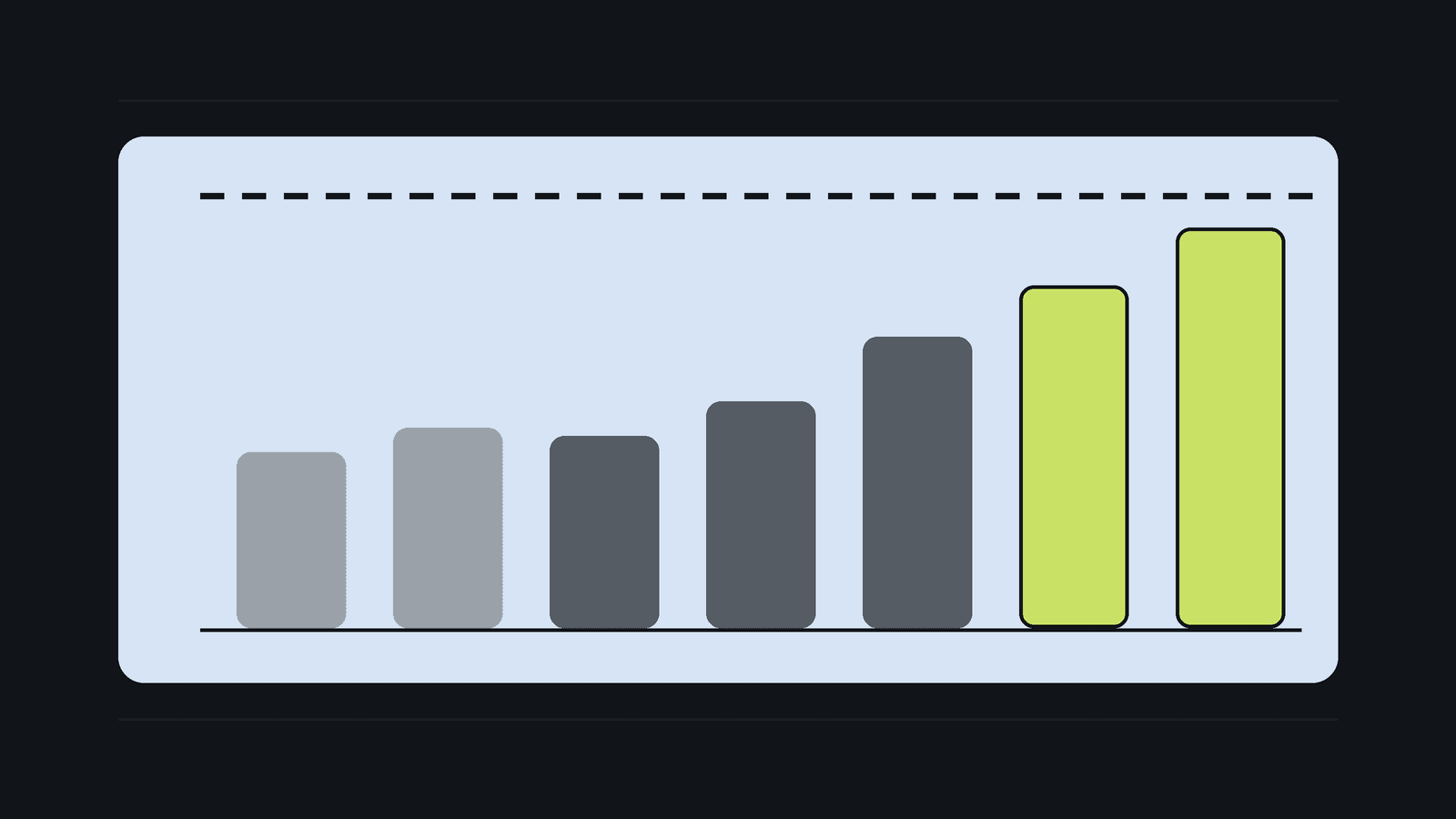
It is bigger than ever. Licensed operators took a record €1.70 billion in online gross gaming revenue in 2025, more than double the figure for 2019, and the second quarter of 2026 was the strongest quarter Spain has recorded. It is also the subject of one of Europe's most instructive regulatory experiments. In 2020, the government banned welcome bonuses, pushed gambling advertising on TV and radio into the hours between 1 and 5 in the morning, and ended shirt sponsorship in football. In 2024, the Supreme Court struck down the bonus ban and several advertising rules, because restrictions of that kind need a law passed by parliament, not a government decree. Bonuses came back, the number of players rose by more than a fifth in a year, and the government has been trying, and failing, to reinstate the ban ever since.
Spain is now moving in a new direction. Measures already adopted by decree will survive the election: payment methods must be in the player's own name, gambling ads must carry tobacco-style health warnings, and from March 2027 a deposit limit will apply across all operators combined, a model borrowed from Germany.
This article looks at how Spain built its licensed market, what the advertising decree did, why the courts overturned part of it, how the market responded, what the black market looks like, and what comes next. We then compare Spain with the markets we have covered in this series, and ask what Denmark, now debating its own restrictions in bill L 37, can learn from the Spanish experience.
A note on where we stand: Fonvig Group works in performance marketing and digital media, and we publish the football analytics site StatsBet in Spanish at statsbet.es. Our sister company Norden Media Group publishes iGaming media in Denmark and Sweden. We have a direct interest in how these markets are regulated, and the views in this article are ours. The facts come from the legislation, the regulator, the courts, official statistics and the sources listed at the end. This is part of our series on gambling regulation, alongside our articles on Finland, Germany and Denmark, Sweden, Norway and Betfair leaving Denmark.
Spain's online gambling market at a glance
| Spain | |
|---|---|
| Law | Ley 13/2011 on the regulation of gambling; first licences in 2012 |
| Regulator | DGOJ (Dirección General de Ordenación del Juego), under the Ministry of Social Rights, Consumer Affairs and Agenda 2030 |
| Licensing | Closed: only three calls for general licences (2011, 2014, 2017–18); none since |
| Active general licences | 135 (2025) |
| Tax | 20% of gross gaming revenue (25% until mid-2018); 10% for operators based in Ceuta and Melilla |
| Online gross gaming revenue | €1.70 billion in 2025 (casino 52.5%, betting 41.1%) |
| Active players | 2.16 million (2025) |
| Advertising | TV and radio only 01:00–05:00; no shirt or stadium sponsorship |
| Welcome bonuses | Banned 2021–2024; allowed again since the Supreme Court ruling of April 2024 |
| Coming next | Joint deposit limit across all operators from March 2027 |
| Unlicensed market | Estimates range from about 4% to 27%, depending on source and method |
How Spain got here
For most of the 20th century, Spanish gambling was divided between the state and the regions. The state lottery company, now SELAE, and the organisation for the blind, ONCE, ran the national lotteries and pools. The autonomous communities licensed casinos, bingo halls and gaming machines on their own territory. Online, international operators served Spanish players from abroad, and some became household names: bwin was Real Madrid's shirt sponsor from 2007 to 2013.
The national framework came in 2011. Ley 13/2011 regulates gambling offered across Spain online, and created a licensing system run by a new regulator, the Dirección General de Ordenación del Juego (DGOJ). The first call for licences in late 2011 drew 59 companies; 55 of them received 93 general licences and 206 singular licences, and the regulated market opened in mid-2012. The DGOJ began life in the Ministry of Finance, moved to a new Ministry of Consumer Affairs in January 2020, and since November 2023 has sat in the Ministry of Social Rights, Consumer Affairs and Agenda 2030. Each move reflected a change in how the government saw gambling: first as a tax and market question, then as a consumer and public health question.
The licence has two tiers. A general licence covers a category, such as betting or "other games" (casino, slots, poker and bingo), and lasts ten years, renewable. Each game type then needs a singular licence. Licensees must use a .es domain and keep their control systems in Spain. The tax was set at 25% of gross gaming revenue and cut to 20% from 1 July 2018, one of the lowest headline rates among Europe's revenue-taxed markets. Operators genuinely based in Ceuta and Melilla pay 10%.
A closed market
One feature of the Spanish model gets less attention than it deserves: the market is closed. General licences can only be granted in a formal call, opened by ministerial order. There have been three: in 2011, 2014 and 2017–18. The last one closed in December 2018. There has been no call since.
That has two consequences. New operators can only enter Spain by buying an existing licensee, which is how recent entrants have come in. And the number of licences is slowly shrinking. According to DGOJ data, 86 general licences were not renewed at the end of their ten-year term between 2021 and 2025, many of them from the first wave in 2012. There were 135 active general licences in 2025.
The market is also consolidating. bet365 holds about 30% of the Spanish online market, Entain's bwin about 10% and Cirsa's Sportium about 6%, according to an investor presentation from September 2026, when Italy's Lottomatica agreed to absorb Cirsa in an all-share merger. Spain does not have the steady stream of new licensees that Denmark and Sweden have, and that matters when the market tightens: a closed market cannot easily replace operators that leave.
The Garzón decree
In November 2020, the Minister of Consumer Affairs, Alberto Garzón, presented Royal Decree 958/2020 on gambling advertising. The government framed it explicitly as a public health measure. Its main rules:
- TV and radio advertising only between 01:00 and 05:00, including during live sport, which removed the previous exception for sports broadcasts.
- No shirt sponsorship and no naming rights for teams, stadiums or competitions.
- No welcome bonuses. Promotions only for customers whose account had been open for at least 30 days and verified, and promotional messages only to existing customers.
- No celebrities in gambling advertising.
- Restrictions online, limiting gambling ads to operators' own sites, gambling-related sites and searches for gambling terms, and narrowing targeting on social media.
- Rules for tipsters: operators can only work with tipsters who publish all their results, and never with people famous for something else.
The rules were phased in during 2021. The bonus rules took effect on 1 May 2021, and the sponsorship and advertising restrictions applied from the end of August 2021, so the 2021/22 football season was the first without betting brands on Spanish shirts.
The effect showed up in the numbers. Online gross gaming revenue fell by 4.2% in 2021, the only annual decline in the published series since 2013. Operators' advertising spending halved in the first half of 2022 compared with the year before, and sponsorship spending fell from €26.6 million in 2020 to about €3 million. A peer-reviewed study published in 2025 found that new accounts fell by 55% between 2020 and 2023 and attributed the drop to the restrictions on advertising and bonuses.
Football felt it too. Before the ban, 30 of the 42 clubs in Spain's top two divisions had commercial deals with betting companies, and seven LaLiga clubs had betting brands on their shirts. LaLiga's president Javier Tebas called the ban contradictory for a legal activity and estimated the cost to Spanish football at €90 million. Crypto and fan-token companies largely filled the gap: they held 34 sponsorships in Spanish sport in 2021–22, against two the season before.
The Supreme Court steps in
The online gambling association Jdigital challenged the decree in court, and so did LaLiga. In April 2024, the Supreme Court ruled in Jdigital's case and annulled several of its central provisions: the restrictions on welcome bonuses and promotions to new customers, the ban on celebrities, the general limits on online advertising, and the rules for video platforms and social media.
The reasoning matters beyond Spain. The court held that advertising is part of the freedom to conduct a business. Restrictions on advertising a lawful activity need sufficient cover in a law passed by parliament, and must be proportionate. A government decree can fill in the details of a law, but it cannot create broad prohibitions on its own. The provisions on bonuses, celebrities and online advertising did not have that legal basis.
The court did not strike down everything. It upheld the 01:00–05:00 window for TV and radio, the ban on shirt sponsorship and naming rights, and the rules on email marketing. A separate ruling on LaLiga's own appeal, also in April 2024, annulled the bonus restrictions again but dismissed all of LaLiga's other claims, including those against the sponsorship ban. Betting brands are still absent from Spanish football shirts.
The rebound
The market responded immediately. Welcome bonuses returned in 2024, and with them the players:
| Year | Online gross gaming revenue | Change | Active players | Operators' marketing spend |
|---|---|---|---|---|
| 2019 | €748 million | +7.0% | 1.37 million | €372 million |
| 2020 | €851 million | +13.7% | 1.48 million | €462 million |
| 2021 | €815 million | −4.2% | 1.47 million | €460 million |
| 2022 | €963 million | +18.1% | n/a | about €375 million |
| 2023 | €1,237 million | +28.4% | 1.64 million | €403 million |
| 2024 | €1,455 million | +17.6% | 1.99 million | €526 million |
| 2025 | €1,701 million | +17.0% | 2.16 million | €664 million |
The number of active players rose by 21.7% in 2024, and the government attributed the increase mainly to the return of welcome bonuses. Marketing spending passed its pre-decree peak in 2024 and reached €664 million in 2025, with promotions and bonuses the largest single item. The growth has continued into 2026: gross gaming revenue in the second quarter reached €539 million, 31% more than a year earlier, helped by betting on the World Cup.
The market has also changed shape. Casino overtook betting in 2021 and passed half of all online revenue in 2023. In 2025, casino accounted for 52.5% of gross gaming revenue, and slots alone for 69% of casino revenue.
The failed comeback
The government did not accept the ruling quietly. Two weeks after it, Minister Pablo Bustinduy, who took over Consumer Affairs in November 2023, announced that he would restore the annulled rules by law.
The first attempt was attached to a bill creating a national public health agency, which failed. The second was an amendment to a law on customer services. It would have written the bonus ban into the gambling law, required payment methods to be in the player's own name, and created a register of gambling suppliers. The Congress of Deputies approved the law with the amendment on 13 November 2025. The Senate, where the opposition Partido Popular holds a majority, removed the gambling provisions as unrelated to the subject of the bill. On 11 December 2025, the Congress accepted the Senate's change by 177 votes to 171, with PP, Vox and Junts outvoting the governing PSOE and Sumar. The law was published at the end of December without the gambling reform.
The third attempt was a reform of the gambling law itself. From May to June 2026, the ministry consulted on new rules for celebrities and influencers in gambling advertising, customer-acquisition promotions, organic search advertising, and tools against illegal gambling. No draft bill had been published when parliament was dissolved in October, and a caretaker government cannot present new bills. The reform, like a separate bill that would have banned paid loot boxes for minors, now depends on the next government.
What survives the election
Not everything needs a law. Several measures adopted by decree or regulator resolution are already in force, or soon will be, whatever the election result:
- Safer gambling environments (Royal Decree 176/2023). Operators must identify "intensive" players, defined as net losses of €600 or more a week for three weeks in a row, and players showing risky behaviour. Those players are excluded from promotions and VIP programmes, and can only pay with methods in their own name.
- Payment methods in the player's name (Royal Decree 813/2026). From 28 October 2026, the holder of a payment method must match the holder of the gambling account. This delivers by decree part of what the failed amendment tried to do by law.
- Tobacco-style warnings. From 5 December 2026, operators and affiliate sites must show rotating health warnings, such as "the probability of being a player who loses money is 75%" and "players' total losses are four times their winnings", on at least 15% of the screen for at least five seconds.
- Higher guarantees. Operators must post larger financial guarantees from 1 January 2027.
- A joint deposit limit (Royal Decree 520/2026). From March 2027, the DGOJ will run a deposit limit that applies across all operators combined: €700 a day, €1,750 a week and €3,300 per four weeks. Players can ask to change it, but increases are only allowed once every three months. A "player portal", already in testing, will let players see their deposits, bets, wins and losses with every licensed operator in one place.
- A common risk-detection model. The DGOJ has developed an algorithm, trained on data from clinically diagnosed gamblers, that every operator will have to run. A draft resolution was in consultation in autumn 2026.
The joint deposit limit is the most significant change. It is close in design to the cross-operator limit Germany introduced in 2021, which we described in our article on Germany and Denmark. The government's justification is that about a third of active players use several operators, and that about 80% of losses come from 10% of players. A limit per operator does little when a player can simply open another account.
The black market
How much Spanish online gambling takes place outside the licensed market depends heavily on who is measuring and how:
| Source | Estimate | What it measures |
|---|---|---|
| Ministry of Consumer Affairs (2025) | About 4% | Illegal online gambling, according to the ministry |
| H2 Gambling Capital, via Investigate Europe (2025) | About 10% | Unlicensed share |
| Jdigital/EY (November 2025) | €231 million in 2024, equal to 16% of the licensed market | Unlicensed gross gaming revenue; implies about 86% channelisation |
| H2 Gambling Capital (October 2026) | Around 78% channelisation | Share of online gambling with licensed operators |
| Yield Sec, via Investigate Europe (2025) | About 27% | Unlicensed share |
The Jdigital/EY study, commissioned by the online operators' association, also found that 23.4% of Spanish online players had used unlicensed sites, often without knowing it, and that bonuses and promotions were the most common reason given for playing on them. Like all industry-commissioned estimates, it should be read with that in mind. The point is not which figure is right, but that the range is wide, and that even the lower estimates describe a market where several hundred million euros a year go to operators with no Spanish licence, no Spanish tax and no Spanish player protection.
Enforcement has been active but often symbolic. An investigation by Investigate Europe found that between 2021 and 2024, the DGOJ fined 75 offshore companies a total of €350 million for running 156 illegal sites, and collected nothing: most were based in Curaçao, and none paid. Blocking is undermined by domain hopping: for the 25 sites of one group linked to unlicensed operations, the regulator had to block 1,616 web addresses. In September 2026, the regulator agreed with Red.es, which runs the .es domain, to monitor and act against gambling domains together. In May 2026, it opened proceedings against the prediction-market platforms Polymarket and Kalshi and ordered their sites blocked.
The DGOJ has also begun to look at affiliates and content creators. In April 2026, it fined the company behind the streamers known as "Zona Gemelos" €10,000 for promoting an unlicensed operator through affiliate links on Instagram, Kick, X and Discord.
Problem gambling: what the health data shows
The government's case rests on public health, and the Ministry of Health's surveys give it substance. In the 2024 adult survey, 1.4% of Spaniards aged 15 to 64 showed signs of possible problem gambling. Among people who had gambled in the past year, the rate was 18.4% for online gamblers, against 4.3% for those who only gambled in person, and it was highest among online slot players, at 31.1%. Among secondary school students aged 14 to 18, 24.4% had gambled in the past year in 2025, and 13% had gambled online, though they are not allowed to.
These figures are a serious argument for strong player protection. They are not, on their own, evidence for any particular measure. The question is which measures reduce harm without pushing the players most at risk to operators that apply no protection at all.
What Spain tells us
Spain is a useful case because it has tried almost every tool, and because it publishes detailed quarterly data. Three lessons stand out.
Advertising restrictions did not shrink the market. Product rules moved it. The 01:00–05:00 TV window and the sponsorship ban have been in force since 2021 and were upheld in court, yet the licensed market more than doubled in the following years. The changes that clearly moved player numbers were the ones that changed the product: the bonus ban, which coincided with a sharp fall in new accounts, and its removal, which coincided with a 21.7% rise in players. For anyone who wants players to choose licensed operators, that is the important finding.
A moderate tax and a growing market are compatible. Spain cut its tax from 25% to 20% in 2018, and the licensed market has grown almost every year since. That does not prove that lower tax causes higher channelisation: a 2025 study in the Harm Reduction Journal, comparing European markets, found no evidence of a negative link between tax rates and channelisation rates. But Spain shows that a moderate rate does not stop a market from generating rising revenue for the state and the regions.
A closed market is a fragile market. With no licence calls since 2018 and dozens of licences not renewed, Spain relies on a shrinking group of operators. When the rules tighten, as they will in March 2027, there is no queue of new licensees ready to fill gaps left by those who leave.
Spain compared
| Spain | Denmark | Sweden | Germany | |
|---|---|---|---|---|
| Online casino licensed since | 2012 | 2012 | 2019 | 2021 |
| Licensing | Closed since 2018 | Open | Open | Open |
| Tax | 20% of revenue | 28% of revenue | 22% of revenue | 5.3% of every stake |
| Welcome bonuses | Allowed since 2024 (banned 2021–24) | Max DKK 1,000, max 10x on deposit plus bonus | One bonus, at first deposit only | – |
| TV advertising | 01:00–05:00 only | Allowed; L 37 would ban it around live sport | Moderation required | No casino ads 06:00–21:00 |
| Shirt sponsorship | Banned | Allowed | Allowed | Allowed |
| Cross-operator deposit limit | From March 2027 | No | No | Yes, €1,000 a month |
| Unlicensed share (selected estimates) | About 4% to 27% | 11.5% (regulator, 2024) to over 28% (H2) | 16% (regulator, 2025) | 23% (regulator study) to over 50% |
What Denmark should take from Spain
Denmark is debating L 37, a bill that would ban gambling advertising around live sport, end revenue-share deals with affiliates and add new duties for operators. Spain offers several lessons for that debate.
Do it by law, if it is done at all. Spain's advertising decree lost much of its force in court because restrictions of that kind needed a law. Denmark is legislating through parliament, which avoids Spain's legal problem. But the Spanish ruling is a reminder that restrictions on a lawful business must be proportionate and well founded, and that courts will check.
Watch the product, not just the advertising. Spain's experience suggests that advertising bans change how operators spend their money, but that product rules, such as bonus bans and deposit limits, change where players go. L 37's advertising restrictions may matter less to channelisation than any future tightening of the product.
Measure in detail, and publish it. Spain publishes market data every quarter, broken down by product, marketing channel and player numbers. That is why the effects of the decree and of the court ruling can be seen so clearly. Denmark's regulator has not yet published its channelisation figure for 2025, as we noted in our article on Betfair leaving Denmark.
Keep the market open. Denmark's open licensing is one of its strengths. Spain shows what happens when entry is closed: consolidation, fewer brands and less resilience when operators leave.
What this means for affiliates and media companies
Spain's rules treat affiliates as part of the advertising chain. The 2020 decree applies to anyone who spreads gambling advertising, "including affiliates, websites and social networks", and makes operators responsible for the affiliates they use. From 5 December 2026, affiliate sites must show the same health warnings as operators. Promoting an unlicensed operator is a serious infringement, with fines of up to €1 million, and the "Zona Gemelos" case shows that the regulator is now applying that to streamers and content creators. The 2026 reform consultation also proposed limiting gambling content in organic search to searches that are directly about gambling, which would hit comparison sites if it were ever adopted.
For publishers, the practical advice is the same as in the Nordic markets: work only with licensed operators, follow the rules on warnings and responsible gambling, and build content that is useful in its own right rather than dependent on a single commercial model. Our guide to iGaming affiliate programs explains how operator–publisher deals work.
Our view
Spain is often described as one of Europe's most restrictive gambling markets, and on advertising it is. But its data tells a more nuanced story than either side of the debate usually admits. Strict limits on TV advertising and sponsorship have coexisted with a fast-growing licensed market. What moved players were the rules on the product itself: when welcome bonuses were banned, new accounts collapsed, and when the court brought them back, players returned.
That is why the measures now coming by decree, above all the joint deposit limit from March 2027, deserve close attention. They may well protect some players. They may also push others, especially the heavy players who account for most losses, towards the hundreds of unlicensed sites the regulator is already struggling to block, in a market that has not admitted a new licensee since 2018. Spain's next government should measure the effect openly, as Spain already does better than most, and be ready to adjust. The lesson for Denmark is the same one we have drawn from Germany and Sweden: player protection works best inside a licensed market that players still want to use.
Sources
- BOE: Ley 13/2011 on the regulation of gambling, Royal Decree 958/2020 on commercial communications, Royal Decree 176/2023 on safer gambling environments, Royal Decree 520/2026 on joint deposit limits, Supreme Court ruling of 2 April 2024, Supreme Court ruling of 19 April 2024 (LaLiga), DGOJ resolution on warning messages and Royal Decree 806/2026 dissolving parliament
- DGOJ: General licences: calls and statistics, Annual online gambling report 2024, Joint deposit limit and player portal and Sanction against Zona Gemelos
- General Council of the Judiciary: Supreme Court annuls several articles of Royal Decree 958/2020
- Ministry of Social Rights, Consumer Affairs and Agenda 2030: Public consultation on reforming the gambling law
- InfoPlay: Congress removes the gambling reform from the customer service law
- Global Gaming Insider: Spain's online gambling market reaches €1.7bn in 2025
- Gaming Intelligence: Spain's online gambling market grows 18.66% to over €539m
- iGaming Business: Spain gambling ad restrictions led to 55% drop in new accounts
- Yogonet: Spain weighs renewed ban on welcome bonuses as online gambling surges
- elEconomista: Illegal online gambling moves €231 million in Spain
- Investigate Europe: Illegal gambling companies receive €350 million in fines and pay nothing
- Reuters: Gambling sponsor ban adds to Spanish clubs' pain, Spain blocks Polymarket and Kalshi and Lottomatica to take over Cirsa
- Palco23: Football reacts to the betting ban with tokens
- Ministry of Health: Report on behavioural addictions 2025
- Marionneau et al. (2025): Channelling and taxation in European online gambling markets, Harm Reduction Journal
- ICLG: Gambling Laws and Regulations 2026: Spain
- La Moncloa: Sánchez calls a general election for 29 November
This article is general information about gambling regulation in Spain and Europe as of November 2026. It is not legal advice. Spain holds a general election on 29 November 2026, and the measures and proposals described may change under the next government.

Steffen Fonvig
Founder & CEO, Fonvig Group
Steffen Fonvig is a Danish-born entrepreneur who founded the company at the age of 22. Based in Oslo, Norway, he leads all operations and strategic decisions across Fonvig Group, which has grown from a web and marketing agency into an international group spanning technology, media and investments.